
Dialysis Catheters
Dialysis Access Care at Renacare
Safe, Expert, Compassionate Procedures for Every Patient. Dialysis access is the lifeline for patients who need regular hemodialysis or peritoneal dialysis. At Renacare, every catheter insertion is performed with precision, strict safety protocols, and senior nephrologist supervision ensuring comfort, confidence, and complete care.
Permanent Permacath (Tunneled Dialysis Catheter)
Long-Term, Comfortable, Infection-Protected Dialysis Access. A Permacath (also called a tunneled dialysis catheter) is a soft tube placed in a large vein—usually in the chest—for patients who need dialysis for several weeks to months.
Why a Permacath Is Used
- While waiting for AV fistula or graft to mature
- For patients who cannot undergo fistula creation
- When long-term, stable access is required
- For emergency dialysis when other options aren’t available
Benefits of Permacath
- Designed for long-term use
- Lower infection risk due to tunneling
- More comfort compared to temporary lines
- Allows smooth, reliable dialysis sessions
How Renacare Ensures Safety
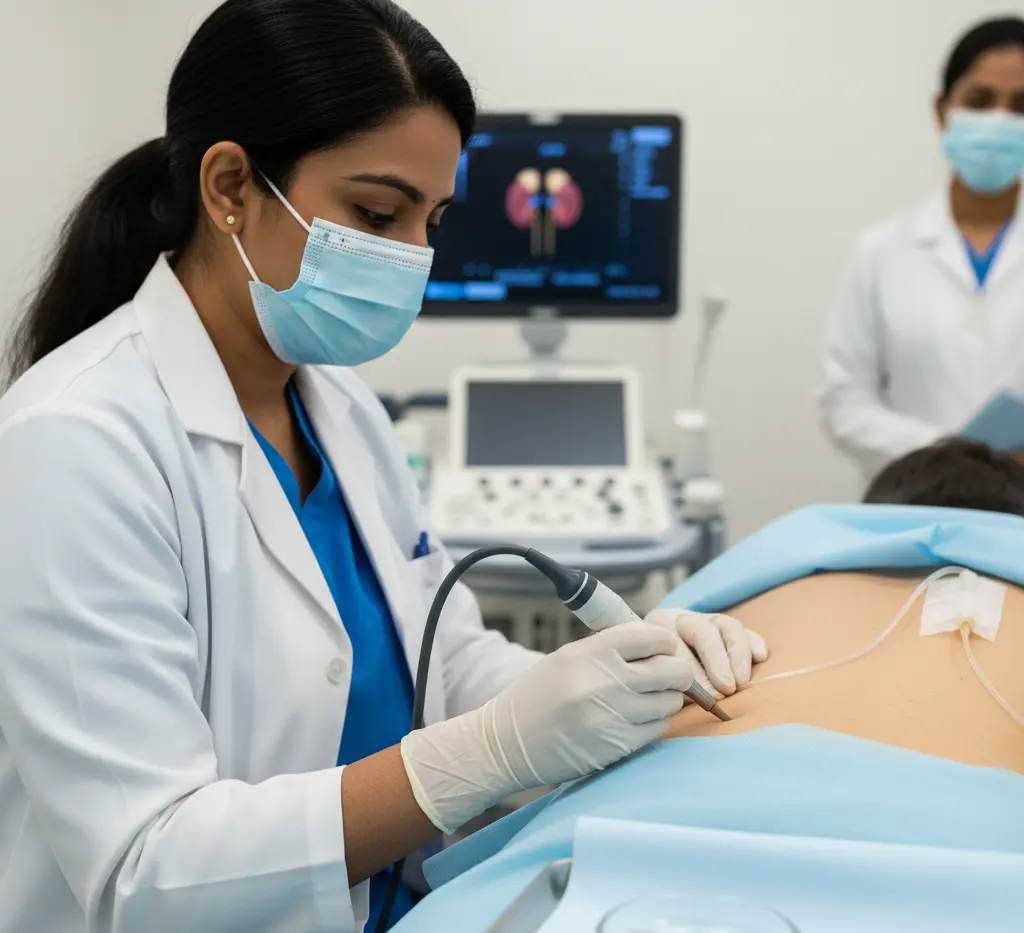
- Ultrasound + fluoroscopy-guided placement
- Senior nephrologist-led–led procedure
- Strict asepsis and post-care education
- Regular dressing, care, and monitoring
- Immediate management if complications arise
Permacath placement at Renacare is quick, painless, and done in a sterile, controlled environment for maximum safety.
Dialysis Catheter (Temporary HD Catheter / DLIJ / DRIJ / SCV)
For Emergency or Short-Term Dialysis Needs. A temporary dialysis catheter is inserted when dialysis must be started immediately—often within minutes or hours.
Common Sites of Permacath
- DLIJ – Right Internal Jugular Vein
- DRIJ – Left Internal Jugular Vein
- SCV – Subclavian Vein (selected cases)
- Femoral Vein – For critical or bedridden patients
Who Benefits Permacath
- Fast access
- Safe for critically ill patients
- Can be used immediately
At Renacare, every temporary catheter is inserted by trained nephrologists using ultrasound guidance for maximum precision and safety.
Femoral Dialysis Catheter
Immediate Access for Critical Situations. A femoral catheter is placed in the large vein in the thigh. It is often used in ICU settings or when upper-body access is not possible.
When Femoral Access Is Needed
- Emergency dialysis in critically ill patients
Patients on ventilators
- Bedridden or unstable patients
- When jugular veins cannot be used
Benefits
- Quickest access for life-threatening conditions
- No need to turn or reposition the patient
- Very useful in emergency and intensive care situations
Renacare ensures femoral catheters are placed with meticulous care, strict infection control, and continuous monitoring.
PD Catheter (Peritoneal Dialysis Catheter)
A Gateway to Gentle, Home-Based Dialysis. A Peritoneal Dialysis (PD) Catheter is a soft tube placed into the abdomen to allow peritoneal dialysis a home-based therapy that cleans the blood slowly and gently throughout the day or night.
Who Benefits
- Patients who prefer home dialysis
- Those with heart conditions who cannot tolerate HD
- Patients waiting for a transplant
- Individuals seeking flexible, lifestyle-friendly treatment
Benefits of PD Catheter
- Allows dialysis at home
- Gentle on the heart
- No needles
- Suitable for children and elderly
- More independence and better quality of life
How Renacare Performs PD Catheter Placement
- Senior nephrologist or surgeon-led procedure
- Laparoscopic or open insertion (based on clinical need)
- Fast recovery
- Complete training for patient and family
- 24×7 support for PD care
Renacare also provides CAPD and APD training, supplies, and ongoing PD monitoring.
The Renacare Advantage in Dialysis Access
- Nephrologist-led procedures
- Ultrasound-guided insertions for accuracy
- Strict aseptic technique
- Patient comfort and safety as priority
- Detailed education on catheter care
- Regular dressing and monitoring
- Emergency access services
- Affordable transparent pricing
Your dialysis access is your lifeline and at Renacare
we protect it with expertise, precision, and continuous care.